
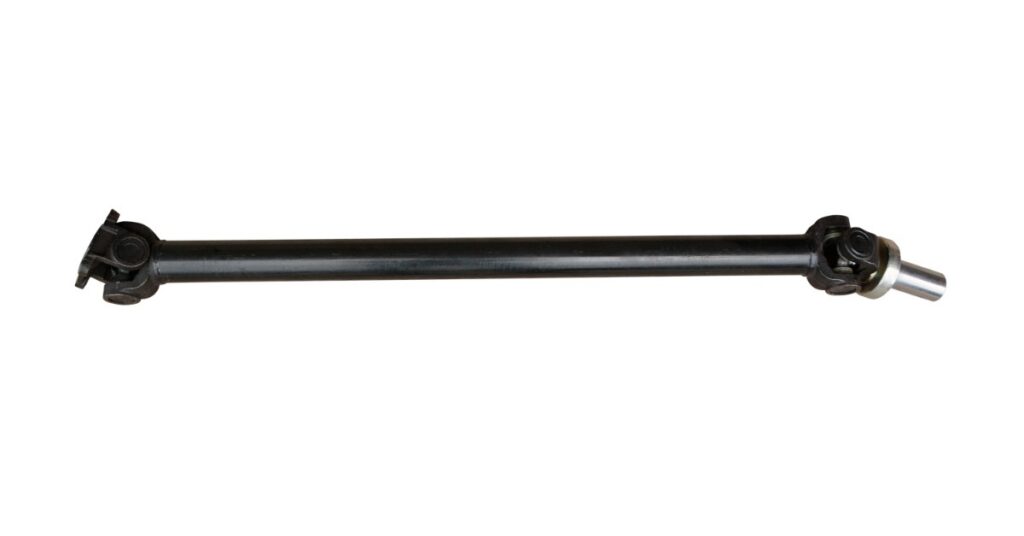
The driveshaft transmits mechanical power and torque to power mining vehicles. From nonstop vibration to steep grades, off-highway vehicles endure extremely rugged conditions. To maintain functional machines, crews need to select the appropriate components
They can choose between one-piece and two-piece driveshafts. One design suits a short driveline path, and the other fits a long machine that requires substantial support. Clarifying the differences between these options will ensure your crew chooses the correct driveshaft for the type of off-highway vehicle.
One-Piece Driveshafts
A one-piece driveshaft uses one continuous tube to move torque from one end of the driveline to the other. Universal joints sit at each end and manage angular movement as the shaft rotates under load. This layout works best on machines with a shorter span between major components and a chassis design that doesn’t force the shaft through a difficult route.
The simple design appeals to some crews who prefer installing and maintaining a small number of parts. Since there aren’t numerous connection points, wear will develop in fewer spots compared to a two-piece driveshaft.
How the Layout Works
Power moves through one shaft tube rather than through multiple shaft sections. As torque enters one end, the full tube spins as one assembly and sends rotational force through the driveline. Tube diameter, wall thickness, balance quality, and length all affect how well the unit performs.
A short shaft is easy to balance and control at various operating speeds. On the other hand, stretching the length too far increases the risk of flex, vibration, and speed issues.
Why Crews Choose One-Piece Driveshafts
Maintenance teams may prefer the one-piece setup because it’s simple to inspect and comprehend. Troubleshooting tends to move faster since technicians don’t need to inspect an intermediate support bearing or multiple shaft sections before narrowing down a problem.
Parts stocking can be ideal for compact off-highway vehicles or short wheelbase machines. Fewer major driveline pieces reduce replacement complexity and help streamline rebuild planning.
The Driveline’s Limits
Trouble starts once the driveline span grows too long. One continuous shaft has to resist bending forces across the full distance, and rough ground adds even greater stress. Shock loading, frame movement, and repeated articulation push the design harder on large equipment.
Packaging may create another concern. Some vehicle layouts don’t leave enough room for one long shaft to travel cleanly through suspension movement and frame geometry. Under those conditions, a one-piece layout may turn from a simple solution into a source of vibration and premature wear.

Two-Piece Driveshafts
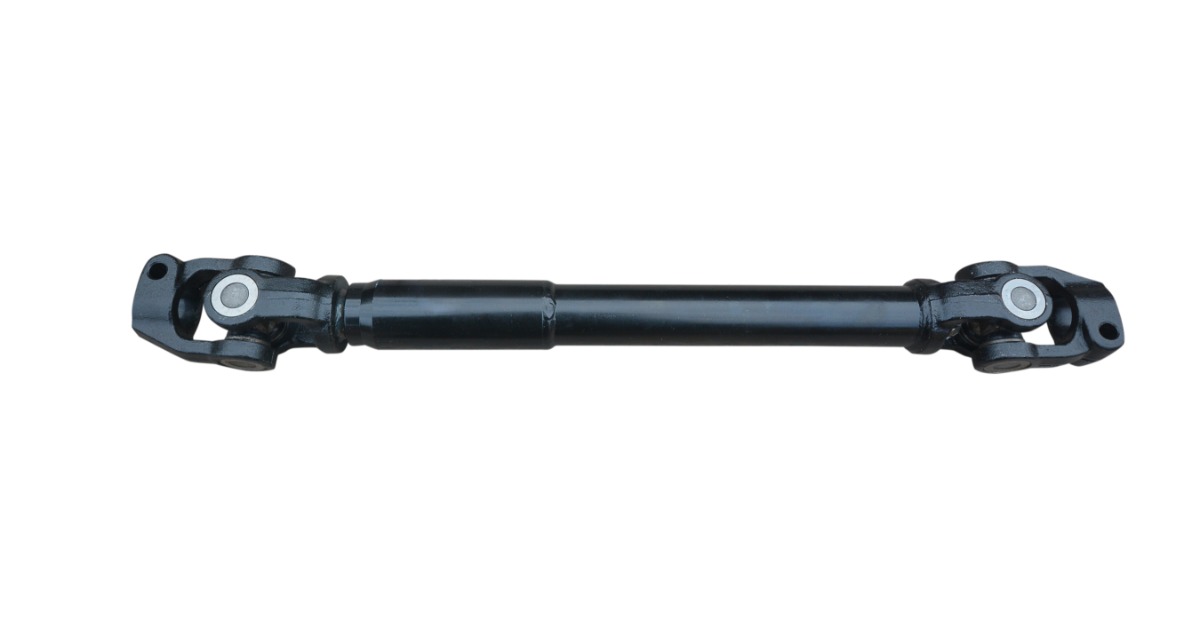
Two-piece driveshafts split the torque path into two separate shaft sections with a center support bearing between them. Engineers are able to manage long driveline distances without relying on one long tube to accomplish the work.
The middle support changes the behavior of the assembly. Instead of spanning the full route in one shot, the driveline works through short sections for enhanced control and stability.
How the Layout Works
Torque leaves the transmission or transfer point, passes through the first shaft section, moves through the center support area, and continues through the rear section. Universal joints manage angle changes at the required connection points. The center bearing supports the driveline near the middle and helps hold the shaft path in line.
Breaking the system into two sections reduces unsupported length on each half. Shorter shaft segments usually resist whip better and run with improved stability at working speed. On long wheelbases, this mechanical advantage is very important.
Why Two-Piece Driveshafts Suit Long Vehicles
Long machines burden the driveline. Two-piece layouts answer this challenge by improving span control, reducing shaft deflection, supporting difficult chassis routing, and helping manage vibration across extended distances.
This design gives engineers greater freedom during machine layout. Structural members, articulation points, axle movement, and tight clearances don’t force the same compromises they would with one long shaft. As a result, a two-piece system fits large off-highway equipment far better than the one-piece arrangement.
Areas Where Service Needs Rise
Extra parts bring extra service points. The center support bearing needs routine inspection because the mount must stay secure and the shaft must remain aligned. If the support bearing wears out or the assembly loses alignment, vibration will spread and shorten the components’ lifespans.
Best Choice for Long Chassis
Machines with a long wheelbase typically benefit from a two-piece arrangement. Long shaft spans raise the chance of deflection and speed-related vibration, especially on equipment that travels over uneven ground all day. Splitting the driveline into two short working sections directly solves the issue.
This advantage shows up across many mining applications. Load-haul-dump units, support vehicles, and various heavy platforms that support great distances without sacrificing shaft stability.
Best Choice for Short Setups
Short driveline paths favor a one-piece shaft. If the machine’s geometry is straightforward and the span remains within a workable range, a single shaft offers clean torque transfer.
Choosing this option is sensible for off-highway equipment that has limited space demands and controlled operating angles. Additionally, the simple arrangement helps crews inspect and replace components without extreme complexity. Instead of adding a center support and another shaft section, the machine benefits from a direct layout that’s manageable during servicing.
How To Make the Right Decision
Teams should review overall shaft length, operating angles, suspension travel, torque load, chassis packaging, and maintenance access before selecting a driveline. Then, evaluate the jobsite. Mine vehicles work through dirt, water, rock, heavy loads, and repeated shock. A driveshaft design that fits the machine and the duty cycle will decrease vibration, protect connected components, and support power transfer across every shift.
Find the Right Fit for Your Mining Vehicles
Comparing one-piece and two-piece driveshafts will lead you to the appropriate off-highway mining vehicles. When you know which specifications match your equipment and working environment, you’ll establish strong, stable, long-lasting equipment.
If your operation needs help choosing a replacement shaft or sourcing driveline components, contact Bull Powertrain. We have durable Dana driveshafts available to keep the equipment running smoothly. Browse our vast inventory of products to select trusted components for off-highway vehicles.